This guide to joint health dietary supplements highlights joint support strategies and herbs for comfort and mobility.
When Your Joints Start Talking, It’s Worth Listening
As we get older—and stay active—many of us come to appreciate just how much our joints do for us every single day. They carry us up mountain trails, through airport terminals, across gym floors, and into the ordinary moments that make life feel like life. When joints start to feel stiff, sore, or “cranky,” it’s a real reminder that joint health isn’t something to take for granted.
At Linden Botanicals, we’ve learned that joint issues rarely have one simple cause—and they rarely respond to one simple solution. Overuse, aging, inflammation, old injuries, repetitive motion, poor recovery, and even stress can all show up in the same place: your knees, wrists, shoulders, elbows, hips, or hands.
That’s why we tend to think of joint health dietary supplements as just one part of a bigger “support strategy.” The foundation still matters: movement, sleep, hydration, nutrition, and smart recovery. But targeted herbal support can be a powerful ally—especially when you choose herbs with a long tradition of use and a growing body of modern research.
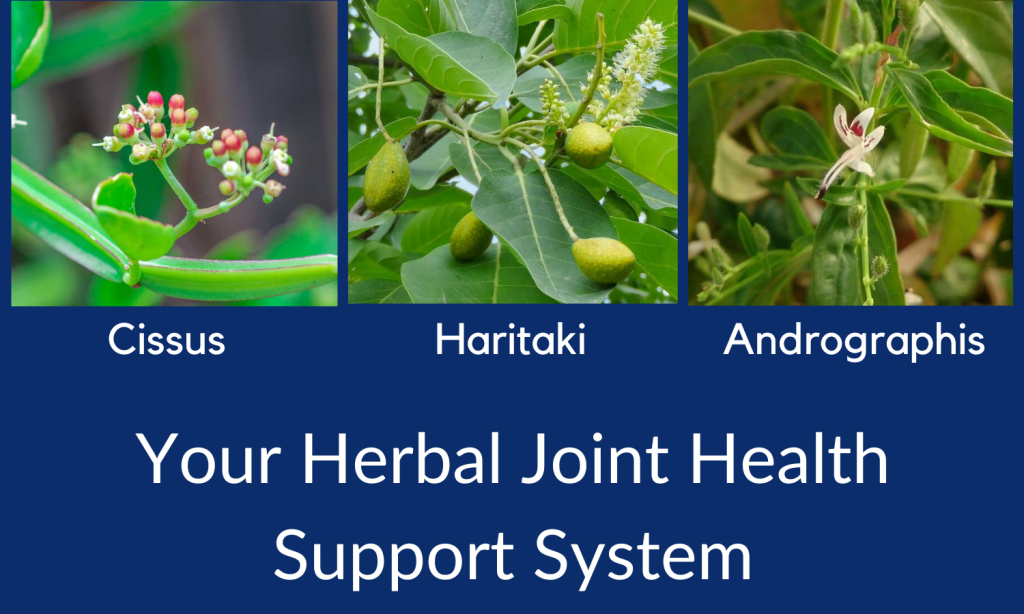
Over the years, three herbs have become our go-to joint support system at Linden Botanicals:
-
Cissus quadrangularis (our first reach for bone + connective tissue support)
-
Haritaki (Terminalia chebula) (for stiffness, inflammation, and deep tissue nourishment)
-
Andrographis paniculata (a strong anti-inflammatory that many people love for swollen, painful joints)
This long-form guide walks through common joint health issues and evidence-informed support strategies—especially for active adults who want to stay moving.
Joint Health Primer: What Your Joints Need to Stay Comfortable and Mobile
Your joints are more than hinges. They’re living systems made of:
-
Cartilage (cushioning)
-
Synovial fluid (lubrication)
-
Ligaments and tendons (stability + force transfer)
-
Bone surfaces (structure and integrity)
-
Muscles (shock absorption and alignment)
Joint discomfort often begins when one piece of this system gets stressed—then the rest compensates. A tight hip can become knee pain. A weak rotator cuff can become shoulder impingement. A swollen tendon can change your gait and irritate your back.
That’s why “joint support” works best when it’s layered:
-
Reduce inflammation and oxidative stress
-
Support connective tissue repair and resilience
-
Promote circulation and recovery
-
Keep gentle movement in the routine
-
Support the whole body’s ability to heal (sleep, stress, digestion, detox pathways)
Joint health dietary supplements can support these goals—especially when it targets more than one mechanism.
Common Joint Health Issues (and Why They’re So Frustrating)
Stiffness and “Start-Up Pain”
That achy stiffness after sitting, sleeping, or driving often reflects inflammation and reduced lubrication. It can also be a sign that surrounding muscles are tight or weak, putting extra load on the joint.
Overuse and Repetitive Strain
Tennis elbow, golfer’s elbow, wrist pain, runner’s knee—these are classic overuse patterns. Tendons get irritated when demand exceeds recovery.
Tendonitis (or Tendinopathy)
Tendonitis is often described as inflammation of a tendon, but many chronic cases involve tendon degeneration (tendinopathy). The big idea: tendons heal slowly, and they need steady, patient support.
Osteoarthritis and Long-Term Wear-and-Tear
Osteoarthritis is not just “getting older.” It’s a complex process involving inflammation, cartilage changes, and altered joint mechanics. People often do best when they focus on strength, mobility, inflammation control, and consistency.
First-Line Joint Support Strategies That Aren’t Supplements
Before we talk herbs, it’s worth naming the basics—because they really do move the needle.
1) Movement that builds, not punishes
-
Gentle walking, cycling, swimming, yoga
-
Strength training (especially glutes, hamstrings, upper back)
-
Mobility work that improves range of motion without forcing it
2) Recovery and sleep
Sleep is when your body repairs tissue and downshifts inflammation. If your joint plan doesn’t include sleep, it’s incomplete.
3) Anti-inflammatory food patterns
You don’t need perfection—just direction:
-
More colorful plants, omega-3s, and polyphenols
-
Less ultra-processed foods, excess sugar, and alcohol (especially during flare-ups)
4) Smart support tools
-
Heat for stiffness, ice for acute flare-ups
-
Bracing/taping when appropriate
-
Physical therapy-style eccentrics for tendons
Now—this is where joint health dietary supplements can be a helpful “multiplier,” especially when you’re doing the basics consistently.
Joint Health Dietary Supplements Spotlight 1: Cissus quadrangularis (“Bone Setter” for Connective Tissue Support)
Cissus quadrangularis has been used traditionally for centuries in Ayurveda and other systems and is often nicknamed the “bone setter.” At Linden Botanicals, Cissus is the herb we reach for first when someone is dealing with joint discomfort, connective tissue strain, or the feeling that their body needs deeper structural support.
Cissus as a joint health dietary supplement
Cissus isn’t only about comfort. Many people use it because it appears to support:
In a small human pilot study involving exercise-trained men, Cissus supplementation over eight weeks was associated with reduced self-reported joint pain (WOMAC improvements). And research continues to explore Cissus’ role in bone-related outcomes as well.
Where it can fit in real life
Let’s say you’re dealing with one or more of the following:
-
nagging knee discomfort after hiking
-
wrist pain that flares with repetitive work
-
elbow or shoulder tendon irritation
-
“I don’t bounce back like I used to” recovery
If so, Cissus is often a reasonable herb to consider as part of your joint health dietary supplement strategy—especially alongside rehab-style strength and mobility work.
The effects of Cissus quadrangularis on bone health, inflammation, metabolic function, antioxidant capacity, and gastrointestinal protection make it a valuable addition to natural health regimens. Key health benefits of Cissus quadrangularis, supported by scientific studies, include bone health, anti-inflammatory and analgesic effects, metabolic health, antioxidant properties, and gastrointestinal health.
A quick note on Lyme disease
Some people include Cissus in broader wellness protocols because it may support inflammation balance and resilience. In the context of Lyme protocols, it’s sometimes used as supportive, though joint health remains the primary reason many people reach for it. You can learn more here.
You can learn more about Cissus quadrangularis by reading the Cissus FAQ.
Joint Health Dietary Supplements Spotlight 2: Haritaki (Terminalia chebula) for Stiffness, Comfort, and “Nourishing the Joints”
Haritaki (Terminalia chebula) is one of those herbs that shows up again and again in traditional systems—and not by accident. In Ayurveda, it’s revered for whole-body benefits, and many people come to it first for digestion. But Haritaki’s relationship to joint comfort is especially interesting.
Haritaki as a joint health dietary supplement
From a joint-health perspective, Haritaki is often used for:
-
stiffness and discomfort
-
inflammation support
-
antioxidant protection (oxidative stress is a major driver of tissue “wear-and-tear”)
-
digestive and detox support, which can indirectly influence inflammation levels
A randomized, double-blind, placebo-controlled crossover study in healthy participants found Terminalia chebula significantly increased pain threshold and pain tolerance compared to placebo.
This doesn’t mean Haritaki “treats arthritis”—but it supports the idea that Haritaki may influence how the body experiences discomfort and physical stress.
The overlooked joint connection: digestion and inflammation
One reason we like Haritaki in a framework of joint health dietary supplements is that many people with joint issues also deal with:
-
bloating, sluggish digestion, or irregularity
-
sensitivity to inflammatory foods
-
systemic inflammation that shows up in multiple places
Haritaki can be a “bridge herb”—supporting digestion while also supporting comfort and mobility. When digestion improves, people often notice secondary improvements in how inflamed (or not) they feel.
You can learn more about Haritaki (Terminalia chebula) by reading the Haritaki FAQ.
Joint Health Dietary Supplements Spotlight 3: Andrographis paniculata for Swollen, Painful Joints
Andrographis is the powerhouse anti-inflammatory in this trio. At Linden Botanicals, we’ve seen it become a true favorite for people who describe their joint issue as:
Andrographis contains compounds like andrographolides that have been studied for anti-inflammatory and immune-support properties.
Evidence-informed joint health dietary supplement support
A double-blind, randomized, placebo-controlled study of a standardized Andrographis extract (ParActin®) found it was effective and safe in reducing pain in individuals with mild to moderate knee osteoarthritis.
(That’s a specific standardized extract and dose context—so we treat it as encouraging, not absolute.)
Where it can fit
Andrographis may be especially helpful when:
-
joints feel inflamed rather than merely “tight”
-
discomfort is limiting activity
-
you’re trying to calm a flare-up while continuing gentle movement and rehab
A quick note about Lyme disease
Andrographis is sometimes discussed in Lyme-focused protocols because of its broader immune and inflammation support. You can learn more here.
You can learn more about Andrographis by reading the Andrographis FAQ.
Putting It Together: A Practical Joint Support Framework
If you’re building an approach to joint health dietary supplements that feels grounded and doable, here’s a simple framework that’s worked well for many people.
Step 1: Decide what your joints are asking for
-
Stiffness + “start-up pain” → consider Haritaki + mobility work
-
Tendon strain / connective tissue stress → consider Cissus + strength/rehab work
-
Swollen, inflamed joints → consider Andrographis + anti-inflammatory lifestyle supports
Step 2: Pair herbs with the “right kind” of movement
Herbs can support comfort, but the long game is rebuilding:
-
glute/hip strength for knees
-
scapular stability for shoulders
-
wrist/forearm strength for elbow and wrist issues
Step 3: Track changes like a scientist (gently)
We recommend keeping a simple note for 2–3 weeks:
That’s often more informative than trying to judge results day-to-day.
How to Choose Joint Health Dietary Supplements You Actually Trust
The supplement world can be noisy. Here’s what we think matters:
-
Herb identity and sourcing (correct plant, correct part, responsible supply chain)
-
Potency and consistency (not all extracts are created equal)
-
A reasonable, honest brand voice (no miracle-cure marketing)
-
Your own body’s feedback (start low, go slow, assess)
At Linden Botanicals, we keep a small, curated collection for a reason: we’d rather do fewer herbs well than everything halfway.
Safety Notes and Responsible Use
We’re herbalists at heart, but we’re also realistic: herbs can be powerful.
-
If you’re pregnant, nursing, immunocompromised, or managing a complex condition, consult a clinician before starting new herbs.
-
If you take medications (especially immunosuppressants, anticoagulants, or blood pressure meds), check for interactions.
-
If your joint pain is sudden, severe, or accompanied by fever, redness, or inability to bear weight—get medical evaluation.
Joint health dietary supplements should support your wellness plan, not replace medical care.
Strong Joints Support an Active, Hopeful Life
Joint issues can be humbling. They can also be clarifying. They remind us that health is not just about “pushing through”—it’s about supporting the body that carries us through everything.
If you’re building a joint support plan, our experience at Linden Botanicals points to a simple truth: consistency beats intensity. Small choices—daily movement, anti-inflammatory meals, good sleep, and targeted herbs—add up.
And for many people, the trio of Cissus quadrangularis, Haritaki, and Andrographis paniculata offers a balanced, all-natural approach:
-
Cissus for connective tissue and recovery support
-
Haritaki for stiffness, comfort, and whole-body inflammation balance
-
Andrographis for swollen, painful joints—especially knees
If you’re ready to explore herbal joint support, Linden Botanicals is here with integrity, careful sourcing, and a steady hand—because we know what it’s like to want your body back.
SHOP NOW