Rock Rose tea provides polyphenol-rich antioxidant, immune, antimicrobial, and seasonal wellness support from the Mediterranean Cistus plant.
Rock Rose tea has been part of Mediterranean herbal traditions for generations, but modern research is giving us new reasons to pay attention to this remarkable plant. Also known as Cistus incanus, Rock Rose produces a naturally polyphenol-rich herbal tea with antioxidant, antimicrobial, immune-supporting, and other properties that have made it one of our favorite botanicals at Linden Botanicals.
It’s also an unusual tea because people often discover it for very different reasons. Some first encounter Rock Rose while looking for immune support during cold and flu season. Others learn about it while researching Lyme disease, biofilms, oral health, or natural approaches to reducing tick and mosquito bites. Still others simply want a caffeine-free, antioxidant-rich tea they can drink regularly.
Those different uses help explain why Rock Rose tea has become one of our most popular teas in both summer and winter.
What Is Rock Rose Tea?
Rock Rose tea is made from the aerial portions of plants belonging to the genus Cistus, a group of flowering shrubs native to Mediterranean regions. Cistus incanus is particularly valued as an herbal tea because of its rich and varied phytochemical profile.
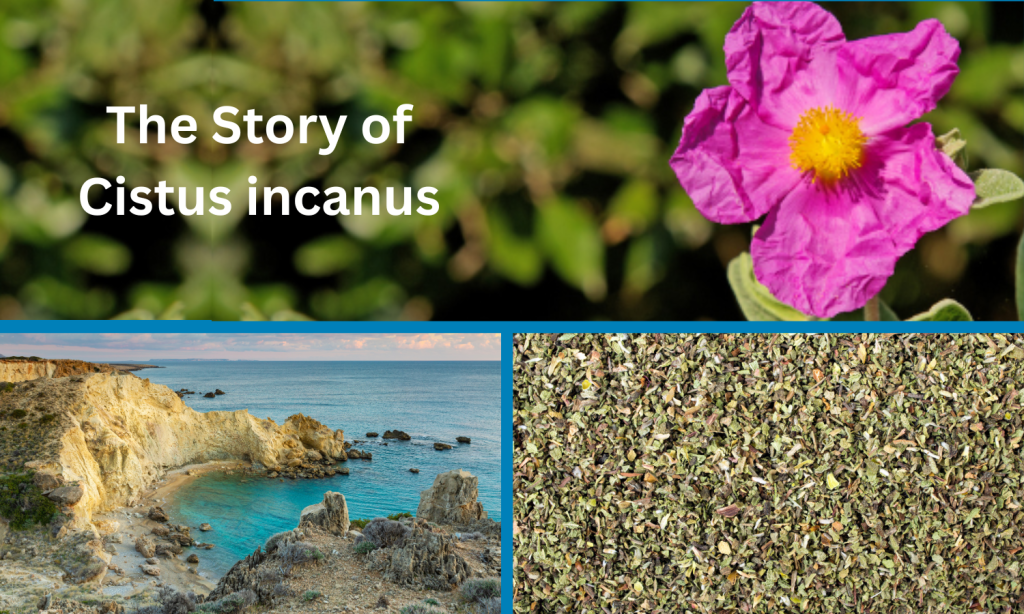
The plant is visually distinctive. Delicate, almost crinkled-looking pink flowers appear against hardy green foliage capable of surviving intense Mediterranean sun, heat, drought, wind, and relatively poor soils. Those difficult growing conditions are part of what makes the plant so interesting.
Plants can’t move away from environmental stress. Instead, they produce protective compounds that help them survive it. Cistus incanus is particularly rich in polyphenols, including flavonoids, phenolic acids, flavan-3-ols, flavonol glycosides, and ellagitannins.
Research examining Cistus incanus herbal infusions has identified dozens of individual phenolic compounds. These phytochemicals are associated with substantial antioxidant activity and are central to much of the scientific interest surrounding the plant.
An Ancient Mediterranean Botanical
The relationship between people and Rock Rose stretches back thousands of years. In Mediterranean herbal traditions, different Cistus species have been used for wounds, skin conditions, gastrointestinal concerns, inflammation, and infections.
Even the mythology surrounding Rock Rose captures the plant’s unusually broad reputation. According to an ancient story, the gods assigned Rock Rose two very different purposes. Some wanted it to heal warriors injured in battle, while others wanted it associated with beauty and skin care. The resulting compromise gave the plant both roles.
Whether or not you put much stock in mythology, the story tells us something important: people have long viewed Cistus as a multipurpose medicinal plant.
Traditional applications eventually attracted scientific interest. Researchers have now investigated members of the Cistus genus for antioxidant, antibacterial, antiviral, antifungal, anti-inflammatory, and other biological activities.
Why Polyphenols Are Central to Rock Rose Tea Benefits
To understand many potential Rock Rose tea benefits, it helps to understand polyphenols.
Polyphenols are plant compounds that serve numerous functions within plants, including helping defend them against ultraviolet radiation, environmental stress, and pathogens. When consumed by people, many polyphenols exhibit antioxidant activity.
Oxidative stress occurs when the production of reactive molecules, commonly called free radicals, outpaces the body’s ability to neutralize them. Some oxidative activity is a normal part of human biology, but excessive oxidative stress can damage cells, proteins, lipids, and DNA.
This is where antioxidant-rich foods and botanicals become interesting. Rather than thinking of antioxidants as a magical shield against disease, it is more useful to think of them as part of the body’s larger system for maintaining cellular balance.
Cistus incanus is notable for the diversity of its phenolic compounds. Research into Cistus infusions has identified phenolic acids, flavan-3-ols, flavonol glycosides, and other constituents with measurable antioxidant activity.
Importantly, the amount of these compounds that actually ends up in your cup depends partly on how the tea is grown, harvested, processed, and brewed. That is one reason we pay so much attention to sourcing and preparation at Linden Botanicals.
Rock Rose Tea for Immune Health Support
Immune health is one of the primary reasons people drink Rock Rose tea, particularly during fall and winter.
The immune system is extraordinarily complex. Supporting it isn’t simply a matter of “boosting” immune activity as much as possible. A healthy immune response needs to recognize potential threats, respond appropriately, regulate inflammation, and eventually return to balance.
The polyphenols and other phytochemicals in Cistus have attracted research interest for their interactions with microbes and immune-related processes. This doesn’t make Rock Rose tea a substitute for vaccination, medical care, antiviral medication, antibiotics, or other appropriate treatment. It does, however, help explain why the plant has such a long history of use during seasonal illnesses.
For many people, the simplest approach is also the most appealing: drinking a warm, caffeine-free herbal tea that provides antioxidant and immune support at the same time.
What Does Research Say About Rock Rose Tea and Respiratory Health?
Rock Rose has been studied specifically in relation to upper-respiratory infections.
In a randomized, placebo-controlled clinical study involving 160 patients with upper-respiratory tract infections, researchers compared a polyphenol-rich Cistus preparation with placebo. Symptoms decreased in both groups, but the reduction was significantly greater among participants receiving the Cistus preparation. Researchers also observed differences in C-reactive protein, an inflammatory marker.
Another study involving 300 participants compared a Cistus preparation with green tea and similarly reported greater improvement in subjective respiratory symptoms among the Cistus group.
These findings are encouraging, but perspective matters. They don’t mean that an ordinary cup of Rock Rose tea “cures” the flu or replaces appropriate medical care. They do provide a scientific foundation for continued research into a plant that Mediterranean communities have used traditionally for generations.
Antiviral Properties of Cistus incanus
Some of the most interesting laboratory research into Cistus incanus has examined how its polyphenols interact with viruses.
In laboratory research involving influenza viruses, a polyphenol-rich Cistus extract interfered with the virus’s ability to attach to host cells. Rather than attacking a particular viral enzyme inside an infected cell, the researchers proposed that polymeric polyphenols interacted with structures on the viral surface, making successful attachment more difficult.
That distinction is interesting because viral attachment is one of the earliest stages of infection.
Laboratory studies shouldn’t be confused with evidence that drinking Rock Rose tea treats viral disease in humans. Still, these findings help explain why Cistus continues to attract attention as a source of potentially useful antiviral phytochemicals.
Rock Rose Tea and Antibacterial Support
Viruses aren’t the only microorganisms researchers have examined.
Cistus incanus extracts have demonstrated activity against certain bacteria in laboratory research, although sensitivity varies considerably by microorganism. More recent research continues to investigate the antimicrobial potential of Cistus constituents, including ellagitannins and related compounds.
This broad activity is one reason Rock Rose has historically been used for purposes ranging from respiratory wellness to oral and digestive health.
Rather than thinking of Cistus as a botanical antibiotic, however, we think it’s more useful to view it as a chemically complex plant containing numerous compounds that interact with microbes in different ways.
Rock Rose Tea and Biofilms
Biofilms are another reason Cistus incanus has generated interest.
A biofilm is a structured community of microorganisms embedded within a protective matrix. You encounter a familiar biofilm every day: dental plaque. Similar microbial communities can develop elsewhere in the body and in the environment.
Biofilms matter because organisms living within them can behave differently from free-floating microorganisms. The protective matrix can make them more difficult for immune defenses and antimicrobial agents to reach.
Research into Cistus tea and oral biofilms provides an interesting example. In one small in-situ study, rinsing with Cistus tea significantly reduced initial bacterial adhesion to enamel. That doesn’t establish Cistus as a treatment for systemic biofilm-associated infections, but it does provide evidence that its polyphenols can influence bacterial attachment.
This research has particular relevance to people interested in oral health and is also one reason scientists continue investigating Cistus and microbial adhesion.
Cistus incanus for Oral Health
The mouth is home to an extraordinarily complex microbiome. Supporting oral health involves much more than simply eliminating bacteria, because many oral microorganisms are normal and beneficial.
One early step in plaque formation is the attachment of bacteria to the thin protein layer that develops over tooth enamel. Researchers have found that Cistus tea can reduce this initial bacterial adhesion.
That makes Rock Rose an intriguing herbal rinse in addition to a drink. Its polyphenols may complement normal brushing, flossing, professional dental care, and other healthy oral practices.
Of course, drinking or rinsing with Rock Rose tea isn’t a substitute for brushing your teeth or seeing your dentist. Think of it as another interesting application of the same polyphenol chemistry responsible for many of the plant’s other properties.
Rock Rose Tea and Fungal Health
Cistus incanus has also demonstrated antifungal activity in laboratory research.
Studies of aqueous Cistus preparations have found inhibitory activity against species including Candida albicans and Candida glabrata. Candida organisms normally live in and on the human body, but under certain circumstances they can proliferate excessively.
As with the antibacterial and antiviral research, laboratory findings shouldn’t be interpreted as proof that Rock Rose tea treats fungal infections. They do, however, reinforce a broader point: Cistus contains a remarkably diverse collection of phytochemicals with activity against several different classes of microorganisms.
Rock Rose Tea as a Natural Insect Repellent
This is perhaps the most surprising reason some people discover Rock Rose tea.
People in Mediterranean regions have long reported that animals feeding among Cistus plants seem to experience fewer problems with biting insects. Today, some regular Cistus drinkers similarly report fewer tick and mosquito bites. (Many of these tea drinkers also prefer a natural insect repellant to DEET.)
The idea is different from applying a conventional topical repellent. Instead, regular consumption is thought to alter the body’s chemical or scent profile in ways that may make the host less attractive to certain biting insects.
Evidence here is much less developed than the research on Cistus polyphenols, antioxidant activity, or respiratory health. There hasn’t been a large, double-blind, placebo-controlled clinical trial demonstrating that drinking Cistus prevents tick or mosquito bites. We think it’s important to be clear about that distinction.
Nevertheless, observational experience has made this one of the plant’s most discussed traditional applications.
For people who choose to use Rock Rose tea this way, consistency matters. It isn’t an instant topical repellent. People generally begin drinking Cistus regularly several days before anticipated exposure and continue using it throughout periods when ticks and mosquitoes are active.
Most importantly, Cistus should be considered an additional layer of support rather than guaranteed protection. In areas where tick-borne disease is a concern, continue using appropriate clothing, tick checks, environmental controls, veterinarian-recommended pet protection, and other sensible precautions.
Drink 2-4 cups a day of the tea for at least a week in order to realize its natural insect repellent effects.
Cistus incanus for Dogs
Interest in Cistus isn’t limited to people. We increasingly hear from dog owners who incorporate Cistus into their pets’ routines during flea, mosquito, and especially tick season.
Cistus can be given to dogs either as brewed and cooled tea or as loose plant material mixed with food. As with human use, it shouldn’t be viewed as an instant-action repellent. People using Cistus for this purpose generally allow approximately five to seven days of consistent use before expecting an effect.
We also recommend viewing Cistus as an adjuvant rather than a substitute for veterinarian-recommended tick and flea protection. Ticks can transmit serious diseases, and no natural botanical should be presented as foolproof protection.
We have considerably more information about Cistus use with dogs than cats. Because reliable feline safety research is lacking, we don’t make the same safety recommendation for cats. Cat owners interested in Cistus should discuss it with their veterinarian.
Rock Rose Tea and Lyme Disease Support
The connection between Cistus and ticks naturally leads to another subject important to many Linden Botanicals customers: Lyme disease.
Lyme disease is caused primarily in North America by the bacterium Borrelia burgdorferi and is transmitted through infected blacklegged ticks. Antibiotics remain the standard treatment for Lyme disease, and anyone who suspects Lyme disease should seek appropriate medical evaluation.
Some people managing Lyme disease also investigate botanicals as complementary support. Cistus is of particular interest because of its antioxidant, antimicrobial, immune-supporting, and biofilm-related properties.
At Linden Botanicals, Cistus is one of three botanicals included in our Persister Desister Chronic Lyme Support Kits, alongside Cryptolepis and Phyllanthus niruri. The herbs are intended to provide complementary support for microbial balance, biofilms, antioxidant protection, immune health, and the liver and other systems involved in recovery.
Again, herbal support and medical treatment aren’t mutually exclusive. We view botanicals as tools that can work alongside appropriate professional care rather than substitutes for it.
Rock Rose Tea for Skin Health and Healthy Aging
Rock Rose’s traditional association with skin and beauty is particularly interesting when viewed through the lens of modern antioxidant science.
Skin is continually exposed to ultraviolet radiation, environmental pollutants, inflammation, and oxidative stress. Over time, these factors contribute to collagen degradation, changes in elasticity, pigmentation, and other visible signs of aging.
The abundant polyphenols in Cistus help neutralize reactive compounds and support healthy inflammatory balance. This doesn’t mean drinking Rock Rose tea will erase wrinkles. It does mean that a polyphenol-rich diet can be one part of supporting tissues exposed to oxidative stress.
Cistus has also traditionally been used externally for wounds and irritated skin. That long history helps explain why skin health remains one of the plant’s enduring traditional applications.
Rock Rose Tea and Digestive Health
Rock Rose has a long history of use for gastrointestinal wellness as well.
Its tannins and other polyphenols contribute to the tea’s mild astringency. Traditionally, Cistus preparations have been used for digestive discomfort and gastrointestinal disturbances, while modern research into its antimicrobial and antioxidant properties offers additional avenues for investigation.
The connection between digestive health and Cistus’s polyphenols is especially interesting. The digestive tract isn’t merely responsible for processing food. It contains an enormous microbial ecosystem and plays important roles in immune regulation and inflammatory balance.
While much more research is needed to understand precisely how Cistus affects the human gut microbiome, its combination of polyphenols, antimicrobial activity, and traditional gastrointestinal use makes digestive health an important part of the Rock Rose story.
Why Rock Rose Tea Is an Excellent Summer Herb
Summer is when the insect-repellent reputation of Cistus receives the most attention.
Hiking, gardening, camping, walking the dog, and simply spending more time outdoors can mean greater exposure to mosquitoes and ticks. For people who already drink Rock Rose tea for its broader health benefits, its potential to provide an additional layer of insect support is an appealing bonus.
You don’t have to drink it hot, either. Brew Cistus normally, allow it to cool, and refrigerate it for a refreshing caffeine-free summer herbal tea.
And unlike a product that comes out of the cabinet only when mosquitoes arrive, Rock Rose provides antioxidant and wellness support regardless of whether you encounter a single bug.
Why It’s an Excellent Winter Herb
Then winter arrives, and the reason for drinking it changes.
Instead of ticks and mosquitoes, seasonal respiratory illnesses take center stage. This is when the research into Cistus polyphenols, respiratory symptoms, and antiviral mechanisms becomes especially interesting.
A warm cup of Rock Rose is naturally well suited to cold weather. It is caffeine-free, pleasantly floral and slightly tannic, and easy to drink regularly.
That’s why we sometimes describe Cistus as both our summer tea and our winter tea. The plant hasn’t changed. The wellness priorities surrounding it have.
Does the Origin of Rock Rose Tea Matter?
Very much so.
At Linden Botanicals, we believe medicinal plants should be understood in the context of terroir, the combination of soil, rainfall, temperature, sunlight, altitude, and other environmental conditions that shape a plant’s chemistry.
This is particularly important with Cistus incanus. Mediterranean plants grow under environmental stresses that influence the secondary compounds they produce. Hot summers, intense sunlight, limited water, and challenging soils aren’t simply obstacles to plant growth. They are part of the environment in which Cistus developed its characteristic phytochemical defenses.
Research comparing commercial Cistus products has also found that geographic origin can help differentiate samples and that products vary in their phenolic profiles.
In other words, the words “Cistus tea” on a package don’t tell you everything you need to know.
Why Linden Botanicals Sources Our Cistus incanus from Crete
We source our Cistus incanus from Crete, the largest Greek island and part of the plant’s historic Mediterranean range.
Our Cistus grows wild rather than in a greenhouse or intensive agricultural environment. It develops under the Cretan sun in the kind of dry, challenging Mediterranean conditions that have shaped this species for generations.
Harvest timing matters, too. Our Cistus is collected in spring, when the aerial portions of the plant are developing and the plant’s phytochemical profile is particularly valuable.
We work with people who understand the plant, the land, and the difference between simply harvesting botanical material and producing a medicinal-quality herb. We also pay close attention to plant identification, processing, storage, and testing.
For us, sourcing isn’t a marketing paragraph added after the fact. It’s part of the product.
Not Every “Rock Rose” Is Cistus incanus
This is an important point for anyone shopping for Rock Rose tea.
Cistus is a genus containing numerous species and naturally occurring hybrids. Common names can create confusion, particularly when products from different countries are all marketed as Rock Rose.
Cistus ladanifer, Cistus albidus, Cistus creticus, Cistus salviifolius, and other species may all be encountered in the Mediterranean. They aren’t chemically identical, and a tea made from one shouldn’t automatically be treated as interchangeable with another.
Even correctly identified Cistus incanus can vary according to geography, growing conditions, plant parts, harvest timing, processing, and storage.
That’s why we encourage people to ask a few basic questions before buying: What species is it? Where was it grown? Was it cultivated or wild grown? When was it harvested? What parts of the plant are included? How was it processed and tested?
A reputable botanical company should be able to answer them.
How Brewing Affects the Tea
Once you’ve purchased high-quality Cistus, how you brew it matters.
Research has demonstrated that brewing water, temperature, and brewing duration can significantly influence the phenolic content and antioxidant capacity of a Cistus incanus infusion. Particularly interesting is the effect of water mineral content: researchers found that highly mineralized brewing water can reduce the amount of certain phenolic compounds remaining in the finished tea.
This occurs partly because polyphenols can precipitate out of the infusion, a phenomenon sometimes called tea creaming.
That’s why Linden Botanicals recommends using distilled or appropriately filtered low-mineral water when practical. It isn’t merely about improving taste. Water chemistry can influence what you actually extract from the plant.
How to Brew Rock Rose Tea
There are several ways to prepare Cistus, including the traditional multiple-brew approach. For regular use, we particularly like a French press because it allows the plant material to remain in direct contact with plenty of water and makes it easy to prepare several servings at once.
For our French press method, place approximately 13 grams, or roughly 1/3 cup, of Linden Botanicals Cistus into a 1-liter French press. Bring one liter of low-mineral water to a boil, remove it from the heat, and wait approximately 90 seconds before pouring it over the plant material.
Gently press the floating Cistus beneath the surface and allow it to steep for approximately 25 minutes. Then slowly lower the plunger and pour your first serving.
The longer steep gives the water time to interact thoroughly with the plant material and extract its phytochemicals. You can drink the tea warm or allow it to cool and enjoy it throughout the day.
Watch our Cistus incanus tea brewing video here.
What Does Rock Rose Tea Taste Like?
For an herb with such an impressive medicinal reputation, Cistus is surprisingly easy to drink.
Rock Rose tea has a mild, earthy, slightly tannic flavor with delicate floral notes. It isn’t aggressively bitter, sugary, or heavily perfumed. Instead, it has the kind of understated flavor that makes sense as an everyday herbal tea.
That’s important. An herb can have fascinating chemistry, centuries of traditional use, and shelves of research behind it, but none of that helps much if you dislike it so strongly that you never drink it.
Rock Rose is different. Many people come for the health benefits and stay because they genuinely enjoy the tea.
How Often Can You Drink Rock Rose Tea?
Rock Rose is well suited to regular use, and many Cistus enthusiasts incorporate it into their daily routines.
Your reason for drinking it may determine how you use it. Someone interested in general antioxidant and immune support might simply make Cistus part of a regular tea rotation. Someone interested in its traditional insect-repellent use may choose to drink it consistently during tick and mosquito season.
Rather than thinking of Rock Rose as something you need to consume in enormous quantities, think about consistency. Botanical wellness is often less about doing something dramatic for three days and more about developing sensible habits you can maintain.
Rock Rose Tea: A Remarkably Versatile Mediterranean Herb
When we first wrote about Rock Rose in 2020, we already considered it an exceptional herbal tea. The years since have only given us more reasons to appreciate it.
The traditional record is extensive. Modern research has identified a diverse collection of phenolic compounds and substantial antioxidant activity. Laboratory research has explored antiviral, antibacterial, antifungal, and microbial-adhesion effects. Human research has provided encouraging evidence related to upper-respiratory symptoms. And generations of Mediterranean use continue to inform how people incorporate the plant into everyday wellness.
Just as importantly, Rock Rose tea is something you can actually enjoy drinking.
At Linden Botanicals, we believe the best medicinal plants often have stories like this: a long history of traditional use, fascinating chemistry, growing scientific interest, and a close connection to the place where they grow.
For Cistus incanus, that place is the Mediterranean. Our Rock Rose grows wild in Crete, where sun, soil, heat, and seasonal stress help shape the plant long before it reaches your cup.
Whether you discover Rock Rose tea while researching immune health, antioxidants, Lyme support, oral health, natural insect repellents, or simply healthier herbal teas, there’s much more to this Mediterranean plant than its delicate pink flowers suggest.
Explore the Immune Resilience Wellness Pathway
A healthy immune system isn’t simply more active. It’s balanced, adaptable, and capable of responding appropriately to everyday challenges.
Linden Botanicals’ Immune Resilience Wellness Pathway brings together carefully selected botanicals, scientific research, and practical education to support immune balance, healthy inflammatory responses, and long-term resilience.
Explore the pathway to learn how thoughtful botanical support can fit into your overall wellness routine.
Healthy Rock Rose Tea for Summer and Winter
For an even deeper dive into sourcing, health benefits, brewing, and traditional uses, visit the Linden Botanicals Cistus incanus FAQ.
Cistus incanus is also as one of the six powerhouse herbal extracts in our ShieldsUp! Immune Support Kit and one of three extraordinary herbal extracts in our Persister Desister Lyme Disease Support Kit.
Buy Cistus
Buy Rock Rose Tea